Working On HR, Not In It: Elevating People Ops with AI-Driven Insight and Automation
AI transforms HR from manual admin to strategic impact. Explore key use cases, benefits for HR, employees, and business, plus how to pilot AI safely.

Matthew Schmidt
December 11, 2025
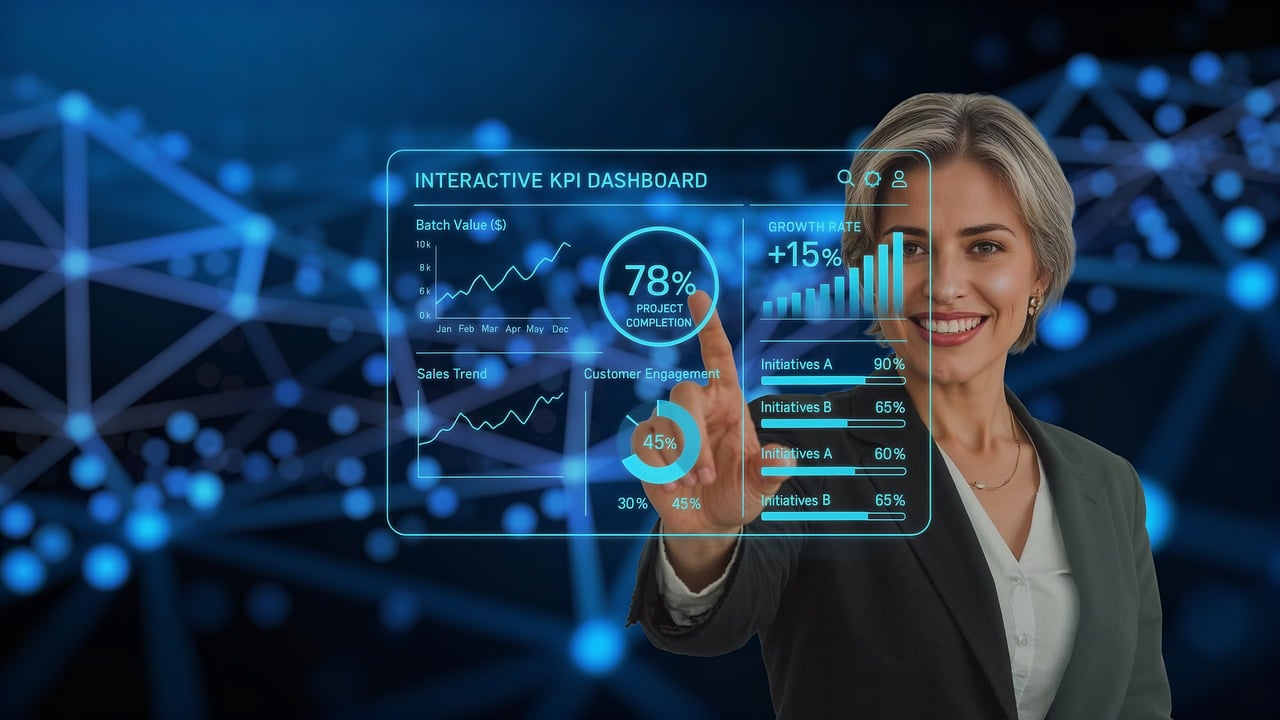
AI is finally giving HR the leverage it has always needed: the ability to see what’s really happening across the organization and to act on it in real time, without drowning in manual work. When applied thoughtfully, AI doesn’t replace HR or managers, it removes friction, surfaces patterns, and helps everyone make better decisions faster.
Working On HR, Not Just In HR
If you lead HR or People Operations today, your world is full of contradictions. You’re expected to drive engagement, performance, and retention, yet much of your week is spent chasing review forms, cleaning spreadsheets, and stitching together reports from disconnected systems. Even when you have the data, it’s often backward-looking, hard to interpret, and time‑consuming to turn into a clear story for executives or managers.
At the same time, employees and leaders expect a more human, responsive experience at work: frequent feedback, fair processes, and managers who actually have time and context to support them. This is the gap AI can finally close. With AI‑native people platforms and agentic tools, HR can move from being the team that maintains processes to the team that orchestrates outcomes, shifting the function from transactional to transformational.
The Most Powerful AI Use Cases For HR
Continuous performance, not just annual reviews
Traditional performance cycles tend to be episodic, slow, and painful. They demand a massive push from HR, only to go “dark” for months at a time. AI allows performance to become continuous by automating reminders, summarizing feedback, and keeping goals front‑and‑center for managers and employees.
In a modern system, AI can draft performance review summaries, pull in relevant OKRs automatically, highlight themes across peer feedback, and suggest talking points for 1:1s, all before a manager even opens the review. Instead of starting from a blank page, leaders start from a synthesized, data‑driven view of each person’s impact and trajectory, which they can then refine with their own judgment and context.
People analytics that predict, not just report
People analytics used to mean dashboards that told you what happened last quarter. AI‑driven analytics turn that into a forward‑looking system that flags risk and opportunity early. These tools can extract insights from your HRIS, collaboration platforms, performance data, and surveys to identify patterns like rising burnout risk, emerging flight risk, or teams that are consistently outperforming.
The most impactful use cases here include: early‑warning alerts for turnover risk, insights into which roles or teams are most affected, and recommendations for targeted interventions such as workload rebalancing, manager coaching, or changes to recognition and development programs. Instead of guessing where to focus, HR can point to clear, evidence‑based priorities and quantify the impact of acting or not acting on them.
Recruiting that’s faster and more consistent
Hiring is another area where AI creates leverage without removing the human touch. Modern AI tools can pre‑screen resumes, surface high‑potential candidates, schedule interviews, and provide structured interview question sets aligned to competencies and past performance patterns. These automations dramatically reduce time‑to‑shortlist and relieve recruiters from repetitive tasks that don’t require uniquely human skill.
On the candidate side, AI can help ensure faster responses, more consistent evaluation criteria, and better communication throughout the process. When qualitative interview notes and assessment data are summarized and compared systematically, hiring managers can make decisions with less bias and more clarity about how each candidate aligns to role requirements and team dynamics.
Always‑on listening and sentiment insight
Employees are constantly giving you information, even when they’re not filling out a survey. AI can take structured survey data, open‑ended comments, and even signals from collaboration tools and translate them into themes, sentiment trends, and hotspots for further investigation. Rather than HR manually combing through spreadsheets of comments, AI can cluster feedback by topic, highlight recurring issues, and show where sentiment is improving or declining.
Used well, this capability allows you to move from annual “big bang” engagement surveys to ongoing listening. When a team’s sentiment around workload or leadership drops, HR and managers can be notified early and supported with suggestions for actions before disengagement hardens into attrition.
AI agents that actually do the work
Many “AI in HR” offerings still deliver static dashboards and one‑off insights. AI agents, like Peoplelogic Nova, go a step further by taking action on your behalf: sending reminders, coordinating workflows, preparing reports, and answering questions in natural language. Instead of asking HR to remember every deadline and chase every manager, AI agents act as a virtual People Ops team operating across Slack, email, and your existing tools.
This shift, from analytics to agency, is what makes AI transformative. Agents can keep performance cycles on track, analyze survey results instantly, nudge managers after intense periods of work to recognize their teams, and prepare concise updates for leadership. HR still sets the strategy and standards, but the day‑to‑day orchestration is shouldered by AI that never forgets, never misses a follow‑up, and is available on demand.
What HR Professionals Gain
Time back, and a bigger strategic voice
When AI takes on the repetitive work of reminders, coordination, summarization, and basic reporting, HR suddenly has hours back each week. That reclaimed time can move into higher‑value work: workforce planning, leadership development, culture design, and partnering with the business on change initiatives that actually move the needle.
Crucially, AI also strengthens HR’s strategic voice. Walking into an executive meeting with predictive insights (e.g. projected attrition in key roles or the impact of engagement on revenue) changes the conversation from “Here is what happened” to “Here is what is likely to happen, and here are the levers we can pull.” That shift elevates HR from a support function to a true business partner with a seat at the decision‑making table.
Clearer decisions, less guesswork
HR is full of judgment calls: Is this a performance problem or a workload problem? Is this team toxic, or just under‑resourced? Should we intervene now, or wait? AI doesn’t replace judgment, but it does give HR much better inputs. By aggregating and analyzing large volumes of data, performance metrics, sentiment, historical promotion patterns, retention trends, etc, AI can quickly identify anomalies, correlations, and risk factors that would be impossible to see manually.
With that intelligence, HR can approach leaders with specific, testable hypotheses: for example, that a team’s elevated attrition risk is driven by conflicting priorities, or that high performers in a certain role consistently lack clear growth plans. Decisions become less about instinct alone and more about informed bets, supported by evidence and checked against real‑time outcomes.
Scalable support without burning out the team
Every HR team knows the feeling of answering the same questions over and over: How do I run a review? How should I document this performance issue? What’s the best way to give this feedback? AI assistants can handle a large portion of that “tier one” support by providing policy‑aligned answers, templates, and step‑by‑step guidance on demand.
Beyond FAQs, AI can quietly coach managers in the background suggesting how to structure a difficult conversation, proposing agenda items for 1:1s based on recent events, or highlighting opportunities for recognition. The result is an HR function that is less reactive and less overwhelmed, yet more present for the situations that genuinely require human nuance, empathy, and experience.
Long‑Term Benefits For Employees And The Business
A fairer, more human employee experience
Done right, AI makes work feel more fair, not more mechanized. Consistent, AI‑supported processes reduce the “manager lottery,” giving employees more predictable access to feedback, clear expectations, and transparent criteria for growth. When performance reviews are informed by a holistic view of goals, feedback, and outcomes, rather than a manager’s last memory of an employee's performance.
AI‑powered listening also means issues are heard earlier and addressed faster. Employees don’t have to wait for an annual survey to voice concerns or suggestions; their feedback is woven into an ongoing loop where themes surface quickly and leaders can respond visibly. Over time, that responsiveness builds trust and reinforces the sense that leadership is paying attention and willing to act on what people say.
Better managers, healthier teams
Managers sit at the center of the employee experience, but many are promoted for technical skill, not for their readiness to lead. AI can act as an on‑demand coach, helping managers understand patterns on their teams, prioritize conversations, and build stronger habits. For instance, agents like Nova can alert a manager when 1:1s have been skipped, when a team’s workload spikes, or when sentiment dips, then suggest specific actions to take.
This steady stream of context and guidance helps managers grow into more proactive, empathetic leaders, regardless of prior training. Teams benefit from more timely recognition, earlier course correction, and fewer surprises in performance conversations. Over time, that translates into higher engagement, stronger psychological safety, and fewer issues escalating to HR because managers are empowered to handle them well at the source.
Retention, productivity, and growth you can measure
From a business perspective, AI in HR is not just about efficiency, it’s about outcomes. Better retention, especially in critical roles, is one of the most direct returns. AI‑driven analytics can identify where attrition risk is rising, why it’s happening, and which interventions have the best track record of working. Reducing unwanted turnover even modestly can save significant recruiting, onboarding, and lost productivity costs.
At the same time, clearer goals, more consistent feedback, and better‑supported managers all contribute to higher productivity and alignment. When employees understand how their work connects to company priorities and receive ongoing coaching and recognition, they are more likely to stay, to grow, and to deliver their best work. The combination of higher engagement and lower churn becomes a powerful growth engine in its own right, especially for SMBs where every hire counts.
How Peoplelogic Impact And Nova Tie It All Together
This is exactly the future Peoplelogic is building toward with Impact and Nova. Impact is the AI‑enabled performance backbone: a modern, people‑first platform for goals, 1:1s, feedback, reviews, and surveys that replaces scattered spreadsheets and rigid, HRIS‑bound workflows. It centralizes the core rituals of performance, goal setting, continuous feedback, structured reviews, while layering in analytics that help HR and leaders see patterns across teams and time.
Nova sits on top of that system as your AI PeopleOps team. It is a suite of AI agents that automate the work HR shouldn’t have to do manually: chasing reviews, analyzing survey comments, sending tailored reminders, summarizing performance data, and surfacing risks or opportunities straight into Slack or email. Nova doesn’t ask HR to log into yet another dashboard; it brings insights and actions into the tools everyone already uses, so execution becomes as simple as having a conversation.
Together, Impact and Nova create a connected people‑intelligence layer for your business. Impact ensures that the right data and rituals exist, aligned goals, timely feedback, structured reviews, while Nova turns that foundation into ongoing motion: nudging, analyzing, and coordinating in the background so HR can focus on strategy and relationships. The vision is simple but ambitious: any organization, regardless of size, can operate with the people intelligence and performance discipline of a world‑class enterprise, without burning out the HR team that makes it possible.
Run A Low-Lift AI Pilot, See Real Results
If you’re an HR leader, people-first founder, or PEO partner, your next step does not need to be a massive transformation project. The most effective way to build confidence with AI is to run a contained experiment where the stakes are low, the learning is high, and the impact is easy to measure.
Start with a single performance cycle or one business unit and layer Impact and Nova on top of the processes you already run today. Give yourself one quarter to answer a few questions: How much time did HR and managers get back, did the quality of feedback improve, and were you able to spot people issues earlier than before.
If the answer is yes, you will have a clear, data-backed story to bring to your leadership team about why expanding your AI footprint is worth it. You do not need to bet the whole company to see what is possible; you just need a focused pilot, a willing team, and the right AI copilots behind your people practices. Get started by scheduling a personalized product demo with a certified HR professional.
More practical guides
Templates, checklists and cycle calendars in the knowledge hub, free.
Recent posts
.png)
.png)
.png)
Turn “we should fix performance” into a repeatable rhythm.
A 30-minute walkthrough with someone who has set this up for a two-person HR team before. No deck.