Rankings, Monitoring, and AI: Where Performance Management Stands Now
Stack rankings and monitoring are coming back, and AI changes how to see one person's contribution. Here is what they cost and what the evidence says about AI in performance management.

Sarah Katherine Schmidt
November 19, 2026
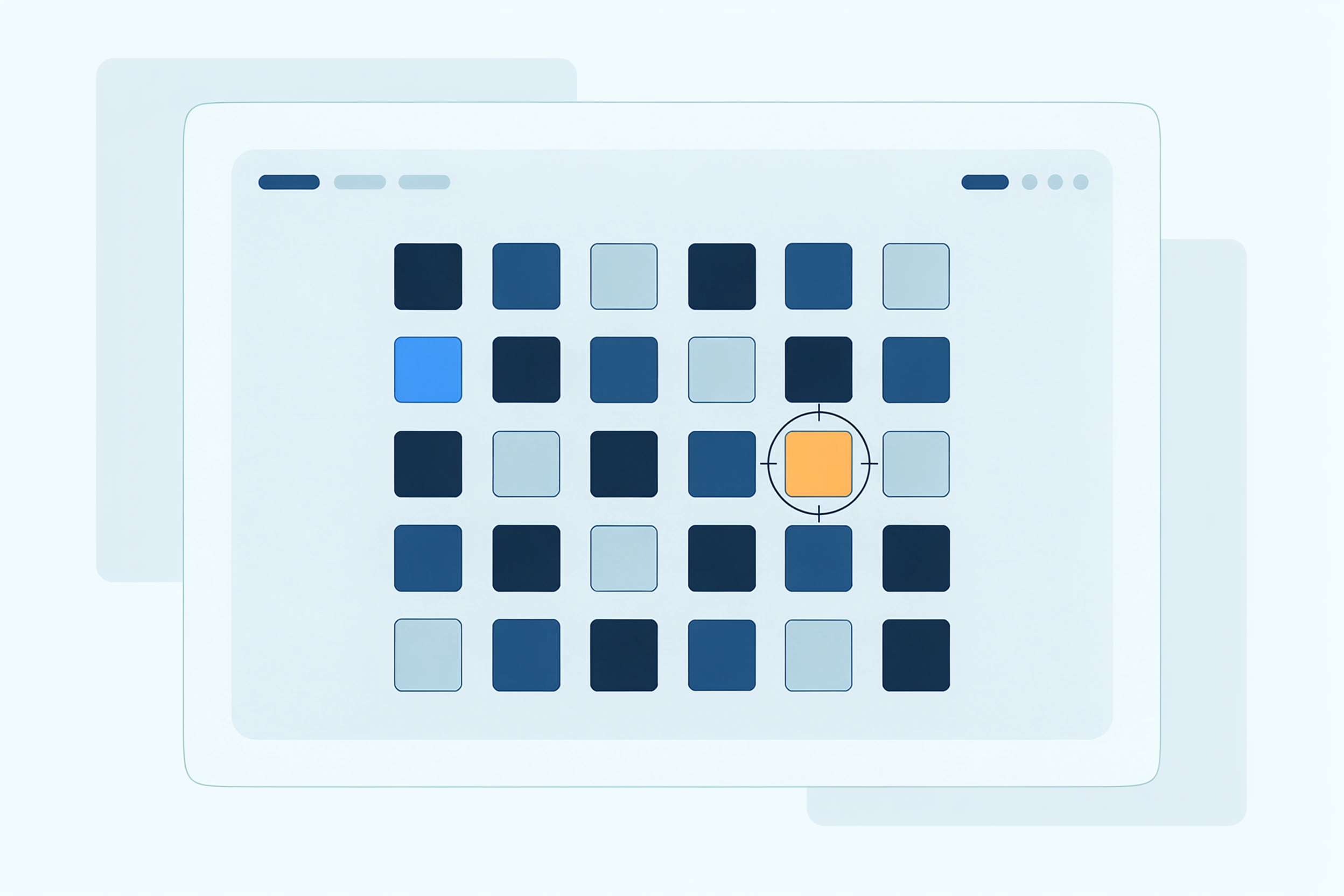
Stack rankings and monitoring tools are returning because leaders feel they have lost sight of the work and want something that looks objective. AI adds a new complication: it makes output cheap, so the usual signs of effort no longer say much about contribution.
This is Part 2 of a three-part series on performance management. Part 1 covers why it has been so hard to get right, and Part 3 covers what HR can do differently.
Why rankings and monitoring are back
Ratings inflated for years, and many executives concluded the system told them nothing. In a June 2025 survey of more than 500 US employers, Mercer found that employers named difficulty differentiating high performers and avoiding rating inflation among their challenges, along with a lack of transparency in how ratings are calibrated and decided. The case for ranking is that better data reduces subjectivity and gives a defensible way to decide who gets paid, promoted, or cut.
Monitoring grew for a related reason. Hybrid work reduced what managers can see, and tracking software fills the gap. Estimates of how common it is vary widely. Gartner put the share of digitally monitored employees at 71% in 2025, as People Matters reports, while a CMI survey of UK managers found 30% to 36% of companies using monitoring tools depending on work arrangement, as ITPro reports. The size of that gap says something by itself: nobody has a reliable count.
What they cost
- Collaboration. Ranking makes helping a colleague a personal cost. Microsoft ended its stack ranking system in 2013 and GE phased out its version.
- Misclassification. Managers have to place solid performers in low buckets. After a few rounds, an organization can run out of real low performers to remove.
- Bias. Korn Ferry notes that women often receive more negative feedback in these systems.
- Trust. In the CMI survey, one in six managers said they would consider quitting if their employer introduced online monitoring. A 2023 study led by Janey Zheng linked the feeling of being closely watched to lower trust from supervisors and more emotional exhaustion.
- Measuring the wrong thing. University of Waterloo research found that productivity metrics focus mostly on time, activity, and device use, not quality or outcomes.
- Data risk. A 2026 Northeastern University study found that all nine monitoring apps it examined shared worker information with outside technology providers.
Seeing one person's contribution in collaborative, AI-assisted work
In most collaborative work, one person's contribution cannot be isolated with much precision, and AI makes that harder. A draft, a model, or a block of code used to be a rough signal of effort and skill. Now two people can produce the same output in very different amounts of time with very different levels of judgment, and the output looks the same.
More data about the individual does not fix this. Keystroke tracking, activity scores, and AI usage counts measure activity, and activity was never the same as contribution. A better question is what the person decided and what changed because of it. Did they pick the right problem? Did they catch what the AI got wrong? Did they make the people around them more effective? Did they take responsibility when it went badly? A manager can only answer those by talking to the person and to the people who work with them, regularly.
That points toward measuring the team's results and treating individual contribution as something described and corroborated. The employee explains what they did and why, colleagues say who unblocked them, and the manager checks that against the outcome. It takes more conversation and produces fewer tidy numbers. It also asks employees to explain how they used AI: what they delegated, what they checked, and what they overruled. A person who can answer that is showing the judgment worth rewarding.
Are AI-powered organizations better at managing performance?
The direct evidence is thin. What exists points to a split: AI does some narrow things better than people, and it can also make weak performance management look more rigorous than it is.
In a working paper summarized by IZA (Rilke and Sliwka, 2026), humans and a large language model received the same noisy but objective performance data. The model rated more accurately, showed no leniency, and was not swayed by whether its rating would change a bonus. Humans were. On subjective tasks, though, the model behaved much like a manager: it avoided the bottom categories, clustered around the middle, and leaned lenient.
The human side adds another gap. In an experiment with 242 experienced managers, reported by UNSW Business School, about 60% used an algorithm's recommendation when it suggested a high rating and about 42% used it when it suggested a low one. The stated reason was concern for the relationship with the employee, not doubt about the algorithm. One of the authors warned that even well-designed systems risk becoming "another layer that appears objective."
The output problem matters too. Research on what has been called workslop, polished AI-generated work that lacks substance and pushes the cost of fixing it onto a colleague, found that 40% of surveyed employees reported receiving it in the past month, as Implicator summarizes. The person who produced it looks productive. The colleague who cleaned it up absorbs the cost and appears nowhere in the numbers. Company-reported productivity gains deserve the same caution: OpenAI's enterprise figures came from self-reported surveys taken weeks after adoption and were not peer reviewed, as Implicator notes.
Some organizations manage performance better in specific, narrow ways, and many mainly look better. The test is whether they measure outcomes and quality, or whether they have automated the counting of activity. Part 3 covers what HR can do about all of this.
More practical guides
Templates, checklists and cycle calendars in the knowledge hub, free.
Recent posts

Turn “we should fix performance” into a repeatable rhythm.
A 30-minute walkthrough with someone who has set this up for a two-person HR team before. No deck.